Is a Spinning Wheel Actually Random?
Someone always asks. Usually right after they lose.
It’s a fair question, and the honest answer involves admitting something that sounds damning at first: a digital wheel doesn’t spin and then land somewhere. It picks the result first, then animates a spin that arrives there.
That sounds like a confession. It isn’t — and the reason why is worth understanding.

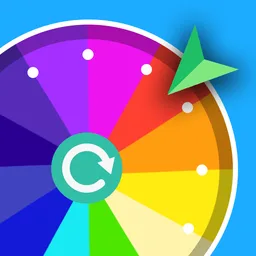
Try Spin The Wheel - Choose
Can't decide? Spin the wheel and let it choose for you.
How a physical wheel works
A real wheel is deterministic. Its result is fully decided by the force of your push, the friction in the bearing, the starting position, and the air in the room. There is no randomness in the physics — only complexity.
It feels random because those inputs are impossible to control precisely and impossible to compute in your head. But a wheel with a sticky bearing, a slight tilt, or a heavier segment is genuinely biased, and skilled people have exploited exactly that in casinos for a century.
So the physical wheel isn’t a gold standard that software falls short of. It’s an approximation of randomness that can fail in ways you can’t see.
How a digital wheel works
The software approach is:
- Generate a random number.
- Map it to one of the slices.
- Animate the wheel so it decelerates and stops on that slice.
Step 3 is theatre. Necessary theatre — but the outcome was fixed the instant you tapped.
The critical question, then, isn’t about the animation. It’s entirely about step 1.
What “random” means for a computer
Computers are deterministic machines, so most random numbers they produce are technically pseudorandom: an algorithm starts from a seed value and produces a sequence that has the statistical properties of randomness. Same seed, same sequence.
In practice this is fine, and better than the physical alternative, because:
- Modern generators pass rigorous statistical tests for uniformity and independence.
- The seed comes from genuinely unpredictable sources — system time in nanoseconds, hardware entropy, input timings.
- The sequence length before repetition is astronomically long.
For deciding what to eat, which is fairer than any wheel with a slightly worn bearing.
Where it genuinely matters — cryptography, real-money gambling — systems use hardware entropy and independent auditing. A decision wheel doesn’t need that standard, and neither does the hat you were going to use instead.
The bias that actually exists
Here’s the one that catches people out, and it has nothing to do with the random number.
Uneven slice sizes. If your wheel has four options and one occupies half the circle, that option wins half the time. That’s obvious when it’s drawn that way. It’s much less obvious when a wheel auto-sizes slices, or when you added a fifth option that got squeezed in.
If you want equal odds, check that every slice is the same size. If you want weighted odds — “pizza twice as likely as sushi” — make that slice twice as wide deliberately. Either is fine. Not noticing which one you have is the problem.
Why streaks are not evidence
The most common complaint is “it picked the same thing three times in a row, it’s broken.”
Three in a row from four options happens roughly once in every sixteen sets of three spins. Over an evening, seeing it is unremarkable — genuinely random sequences contain clusters, and human intuition consistently expects them to be more evenly spread than they are.
If anything, a wheel that carefully avoided repeats would be the rigged one.
So does the animation matter?
Yes, and not for the reason people assume.
The spin isn’t there to generate the result. It’s there so that everyone watching can see a process happen, agree that nobody interfered, and accept the outcome. A number appearing instantly on screen is mathematically identical and socially useless — it looks like someone chose.
That’s the real function of any randomiser used in front of other people: not to be fair, but to be visibly fair. Coins, dice, straws, and wheels all do the same job. The wheel just does it with more suspense and works for more than two options.
The practical version
- The result is decided before the animation, and that’s fine.
- The randomness is pseudorandom and comfortably good enough for any decision you’d use a wheel for.
- The bias worth checking is slice size, not the algorithm.
- Streaks are normal and prove nothing.
- Agree that the result is binding before you spin. That’s the only rule that actually matters.
Spin The Wheel - Choose gives every slice equal weight unless you make it wider on purpose, so what you see on the wheel is what the odds actually are — and you can build the wheel however you like, with your own text, colours, images, and sounds.